
It’s one of the first questions homeowners understandably want answered:
What is this remodel going to cost?
It’s also one of the hardest questions to answer well at the beginning of a project.
You may talk with three or four remodelers and hear very different numbers for what sounds like the same project. One person may give you a number that feels comfortably within reach. Another may be substantially higher.
So which one is right?
At an early stage, that may not be the most useful question.
Before the design has been developed, existing conditions investigated, materials selected and the scope clearly defined, every preliminary number contains assumptions.
Understanding those assumptions can tell you much more than comparing the numbers alone.
Similar Projects Aren’t Necessarily The Same Project
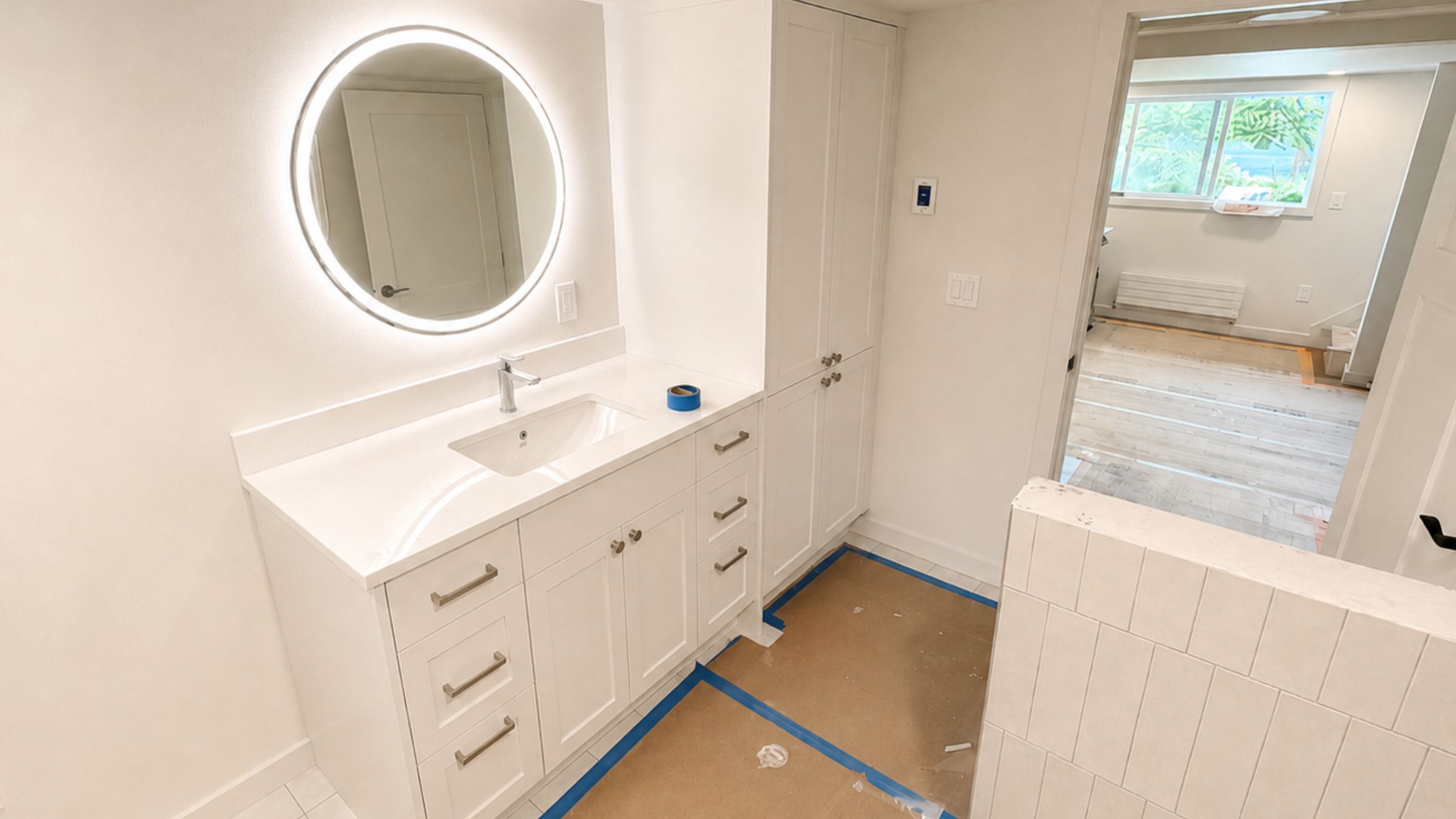
Take something seemingly straightforward like remodeling a bathroom.
Two bathrooms may be similar in size and still require very different investments.
One might keep the existing layout and plumbing locations. Another might involve moving plumbing, correcting previous work or addressing conditions discovered in an older home.
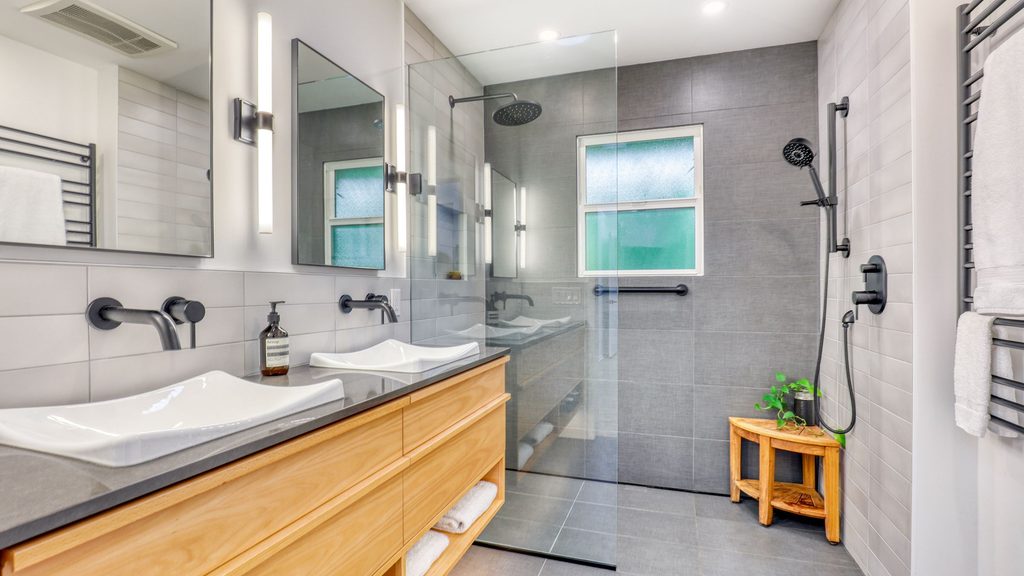
One homeowner may choose readily available materials and fixtures. Another may want custom cabinetry, tilework or details appropriate to the character of the house.
The level of design, construction planning and services included can also differ from one remodeler to another.
Square footage alone doesn’t tell you those things.
That’s why a preliminary number becomes more useful when you understand what’s behind it.
What Does The Number Actually Include?
Before comparing early remodeling numbers, it helps to ask what each remodeler is assuming.
Does the number include design and preconstruction?
Engineering?
Permits and taxes?
What level of cabinetry, fixtures, finishes and other materials is assumed?
What is the remodeler assuming about conditions inside the existing house?
What has actually been investigated, and what remains unknown?
Even the type of number matters. A planning range based on an initial conversation isn’t the same thing as an estimate based on developed drawings and trade pricing. And neither should be treated as a final project price.
Without that context, two numbers that appear to describe the same remodel may actually describe substantially different projects.
How Much Confidence Should You Have In An Early Number?
This is where remodeling can be frustrating from the homeowner’s side.
You need some idea of the investment before deciding whether it’s worth spending more time and money developing the project.
At the same time, the work required to produce a highly reliable number often hasn’t happened yet.
That doesn’t make an early number useless.
It means the number should reflect what is reasonably known at that point, and the assumptions and significant unknowns behind it should be visible.
As the project develops, those assumptions should gradually be replaced by better information.
The design becomes more specific. Existing conditions can be investigated. Product and material decisions are made. Engineers and trade partners can weigh in where needed. Scope becomes clearer.
The expected investment should become clearer with it.
What If The Number Changes?
One concern we hear from homeowners is the fear of beginning with one expectation and discovering much later that the project will cost substantially more.
It’s a reasonable concern.
Remodeling an existing home always involves some uncertainty, particularly with older houses. No process can guarantee that every condition will be known from the beginning.
But there’s a significant difference between uncertainty that is acknowledged and managed and important information arriving after the homeowner has lost meaningful choices.
If new information materially changes the likely investment, knowing earlier gives you options.
You may decide the additional investment is worthwhile.
You may change materials or simplify part of the design.
You may reduce the scope and protect the parts of the project that matter most.
You may decide to wait.
Or you may decide the project no longer makes sense.
Those aren’t necessarily signs that something has gone wrong. They can be the result of learning enough about the project to make a better decision.
What Would Make The Remodel Worth It To You?
That’s why we often approach the early budget conversation from another direction.
Instead of only asking, “How much can you spend?”, we also want to understand:
What level of investment would make this project worth doing for you?
Those aren’t necessarily the same question.
A homeowner may have the financial ability to spend $300,000 on a project and still decide that what they’ll gain isn’t worth $300,000 to them.
Someone else may begin with a lower number in mind and decide to invest more after understanding what a more complete solution could change about the way they live in their home.
Neither decision is inherently better.
The purpose isn’t to find out how much someone can be convinced to spend.
It’s to understand the relationship between the problem they’re trying to solve, the outcome they’re hoping to create and what accomplishing it is likely to require.
The Goal Isn’t Perfect Certainty
At the beginning of a remodel, there will be things nobody knows yet.
A confident-sounding number doesn’t change that.
What matters is understanding what the number is based on, what’s included, what assumptions are being made and what still needs to be learned.
Then, as better information becomes available, the homeowner should be part of deciding what happens next.
That’s a different kind of certainty.
It’s not knowing exactly where the project will end before you’ve begun.
It’s having enough reliable information to make the next decision well.